
Written By John VanDerLaan
We may earn revenue from the products available on this site and participate in affiliate programs. Learn more
There is nothing worse than hunting with cold feet. Our team of experts weigh in with their top picks for the best extreme cold weather hunting boots to help keep your feet warm in the tree stand, ground blind or even hunting on foot.
Click here for our picks for best hunting boots for all different situations.
After much cold weather hunting and testing,
Here's what we've found.
Best For Extreme Cold
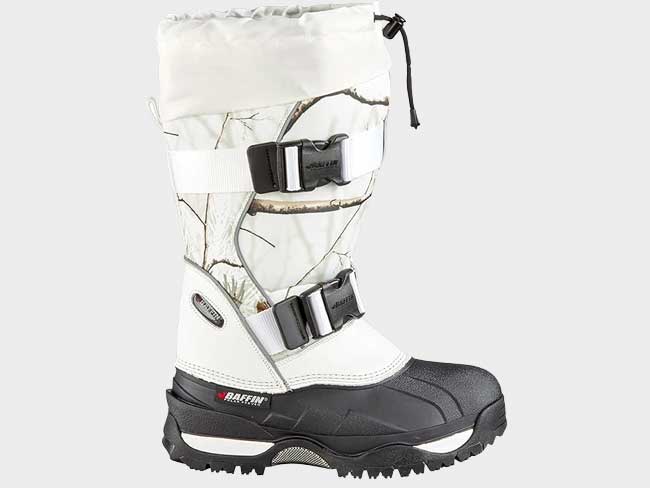
Baffin Impact Pac Boots
best for deer hunting on the move
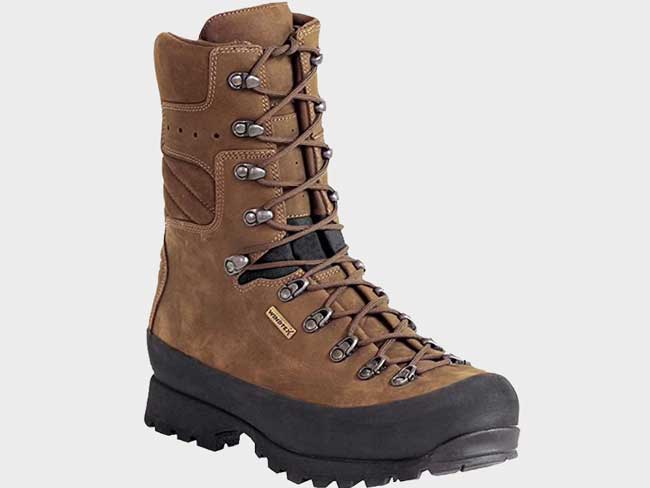
kenetrek mountain extreme
Best For Sitting In A Tree Stand
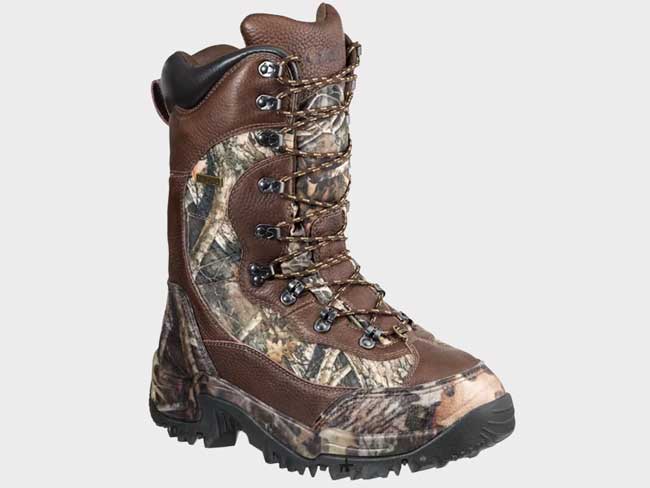
cabela inferno 2000 Gram Thinsulate
List Of The Best Cold Weather Hunting Boots
Best Cold Weather Hunting Boots: Reviews And Recommendations
Below you will find our top picks for cold weather hunting boots, complete with reviews and a thorough buying guide.
Best For Extreme Cold: Baffin Impact Boots
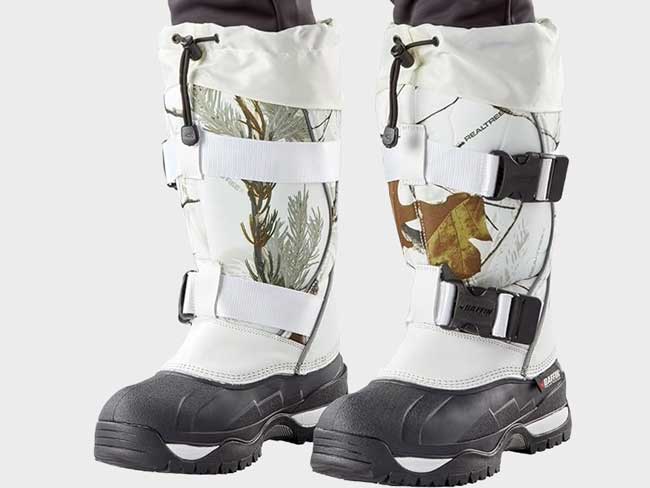
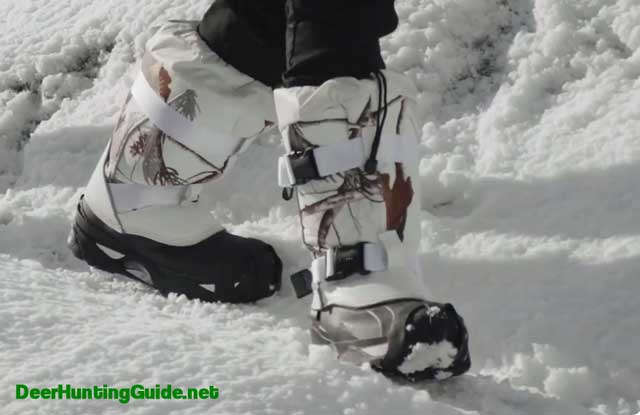
The Baffin Impact Pac boots are purpose-built expedition-grade winter boots that late-season hunters have adopted when standard insulated hunting boots leave their toes numb after an hour on stand. Years ago, boots like this were reserved for arctic expeditions and snowmobile enthusiasts, but hunters in extreme cold discovered their value for helping your feet stay warm while stationary hunting in brutal conditions.
Core specs relevant to hunters:
- Rated to approximately -100°C/-148°F by Baffin
- Shaft height around 13-14 inches
- Arctic Rubber shell with fabric/nylon upper
- Removable multi-layer liner with 9 insulation layers
- Weight: 7.42 lbs per pair (size 9)
- External forefoot width: 5.25 inches
I tested the Baffin Impact Pac Boots last late season in northern New England, during some extremely cold temperatures and during a major snow storm. I sat all day in a ladder stand and ground blinds. I never would have made it as long as I did in those conditions with any other boot.
Pros:
- The Baffin Impact boots rank among the warmest hunting boots available, rated to -148°F (-100°C), making them ideal for static sits in tree stands and ground blinds during late-season hunts when temperatures plunge well below zero.
- These boots excel for cold weather hunting where movement is minimal—think December whitetail sits, predator calling , and ice fishing between waterfowl sets.
- The multi-layer removable liner system featuring nine distinct insulation layers, combined with the honeycomb EVA sole, keeps feet warm when every other hunting boot fails after a few hours.
Cons:
- They feel heavy and clumsy for walking long distances or still-hunting through timber.
- Not for early season or temps above around 30 degrees.
For late-season hunters who’ve abandoned productive stands because their feet quit, the Baffin Impact is one of the best choices available. These boots solve a specific problem that no standard hunting boot addresses—keeping feet warm through hours of motionless sitting in genuinely brutal cold.
Consider them a specialized extreme-cold hunting boot rather than an all-around option. They sacrifice agility and lightness in exchange for unmatched warmth and comfort when you’re stationary. The trade-off makes sense for the right hunter.
Click here to see my testing and full review of the Baffin Impact Boots.
Best For Sitting In A Tree Stand Or Ground Blind: Cabela's Inferno 2000 gram Insulated Waterproof Boots
For tree stand hunting in cold winter weather, the first feature to look for is thick insulation. The Cabelas Inferno has some of thickest insulation you'll find with 2,000 grams of 3M Thinsulate insulation. You could probably fall asleep in your tree stand or ground blind and still wake up with warm toes.
In fact, it's not just the insulation that keeps your foot warm. This boot has a SolarCore aerogel insulation on the underside, it's warm even in frigid winter weather.
At the same time, the 4Most Dry-Plus lining is one of the best at preventing moisture from entering the boot, not only important for your comfort, but for staying warm on a cold winter morning. It's moisture-wicking, too, meaning that if you do end up sweating, it pulls that sweat away from your foot so that it doesn't freeze later.
Further proof that it's a great boot for winter weather from snow to sleet, the Inferno has an aggressive outsole that provides a high level of traction on slippery terrain. It also works with the waterproof lining to keep water outside of the boot and away from your feet.
We really like the cushioned EVA midsoles toe caps and heel caps that protect your foot from the unexpected dangers of unfamiliar ground or ground hidden under the snow. That said, it may not be the best bet for those with wide feet. Hopefully Cabela's will release a wide size soon.
Pros:
- 2000g Thinsulate insulation
- SolarCare aerogel insulation
- Waterproof lining
- Moisture-wicking lining
- High-traction sole
- Protective heel and toe caps
Cons:
- Narrow fit
This was the warmest boot we tested for warm feet in a tree stand or blind during cold weather. Not only does it keep you warm and dry with two different types of insulation and a waterproof lining, but it's extra tall to work with your pants and prevent snow or water from leaking in through the ankle. Plus, you can handle the icy ground with agility and silence thanks to the treaded sole and protective heel and toe caps.
Warmest Scent Free: Cabela's Zoned Comfort Trac 2,000-Gram
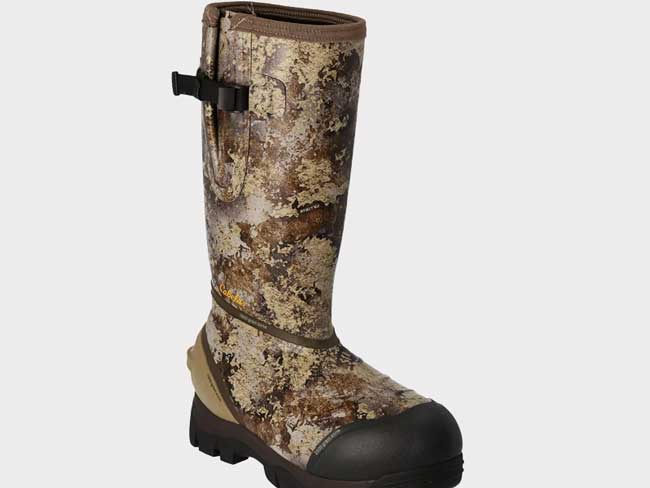
As hunters, we want to reduce the human scent that we leave behind. However, most boots of this type aren't as warm as their leather counterparts. That isn't the case with the Cabelas Zoned Comfort Trac, which features zoned insulation so that you have warmth where you need it the most.
These boots feature 2000 grams of 3M™ Thinsulate™ Ultra Insulation in the toes, 1200 grams in the heels and 1600 grams everywhere else.Insulation strategically placed where you need it the most.
With warmth and a design reinforced at the toe and heel, this boot is excellent for trekking through deep snow or long sits in a tree stand or ground blind.
Our favorite feature are the wool felt frost plugs that provide a thermal barrier between your feet and the ground.
Other than that, we found that Cabelas did a good job making this boot comfortable. In addition to a cushioned midsole that absorbs the impact of each step, the liner is also moisture wicking so that you don't overheat if the hike is particularly grueling or the day warms up.
Pros:
- 3M™ Thinsulate™ Ultra Insulation
- We love the side gussets with cinch buckles
- Completely waterproof
- Wool Felt for additional cushioning
- Moisture wicking
- Odor fighting technology
Cons:
- Not available in wide sizes
One of our staff members used these boots on a deer hunting trip to Alberta Canada and they performed flawlessly. He spent all day in a ground blind with frigid temperatures and these boots kept his feet toasty warm. We highly recommend them.
Best For Deer Hunting On The Move: Kenetrek Mountain Extreme 1000
If you hunt deer in the cold, chances are you're doing so in some extreme conditions. For that you need a boot like the Kenetrek Mountain Extreme. It's made with a 2.8mm full-grain leather upper with double and triple stitching so it can handle scrapes, impacts, and the general abuse of hiking off the beaten path.
Plus, the toe cap protects your toes in case you accidentally kick a rock buried in the snow. Along with the corrosion-resistant boot construction that bends instead of breaking, this also helps the boot last a lot longer even if you hunt frequently and in conditions that would get the better of other boots.
Similarly, the K-Talon outsole helps you take on the mountain because it has great traction even on loose inclines. Meanwhile, the nylon insole cushions your foot even when you're walking on rocky ground.
Of course, to make it onto our list, the Mountain Extreme also had to be warm. It has 1,000 grams of Thinsulate insulation in addition to a Windtex waterproof membrane. This keeps your foot warm whether you're dealing with snow, wind, or just high altitudes and thin air. In fact, it can even be a bit too warm, so we recommend only using it in cold weather that lasts all day.
Pros:
- Tough leather upper
- Strong, protective toe cap
- Flexible design
- High-traction sole
- 1000g Thinsulate insulation
- Windtex waterproof membrane
Cons:
- Expensive
If we had to use one word to describe the Kenetrek Mountain Extreme boot, it would be "tough." Give it a look if you've had trouble with your cold-weather boots wearing down quickly in the past. Its durable construction involves triple seaming, full-grain leather and a flexible construction that can contort to demanding terrain without breaking. Plus, it's a warm boot with thick insulation and waterproofing.
Warmest Women’s Hunting Boots: Kenetrek Women's Mountain Extreme 1000G

The Kenetrek Women's Mountain Extreme boot has exactly what a woman needs to hunt in cold weather. Most importantly, it has 1,000 grams of Thinsulate insulation that traps in body heat at low temperatures even if you're sitting in a tree stand. Plus, the Windtex waterproof membrane keeps out moisture like snow and rain that would freeze your feet.
We also liked that Kenetrek designed this boot with the female foot and step in mind. For example, it has an appropriate eight-inch upper that's better for the female ankle and a narrower heel that helps prevent the heel slip many women experience in unisex boots. Additionally, the nylon midsole along with the supportive insole provides support step after step while the flexible design allows the boot to actually work like a spring and help your foot move.
Finally, the Women's Mountain Extreme does as good a job as the men's version when it comes to foot protection. It has the same full-grain leather upper attached to a sole guard that provides abrasion resistance high up on the foot, meaning you can go off trail. The sole itself also has deep treads for improved traction.
Pros:
- 1000g Thinsulate insulation
- Windtex waterproof membrane
- Female-specific fit
- Supportive insole
- Protective sole guard
- High-traction sole
Cons:
- Expensive
Female hunters should definitely look for a women's boot because the female foot is shaped differently and the female step is a slightly different movement. The Kenetrek Women's Mountain Extreme addresses this with an expertly designed fit that includes a lower ankle and narrower heel. Combined with the general support and durability of a Kenetrek boot, this gives you stability on your feet and a secure fit that keeps you warm and comfortable for long periods.
Warmest Rubber Boots: Muck Arctic Pro
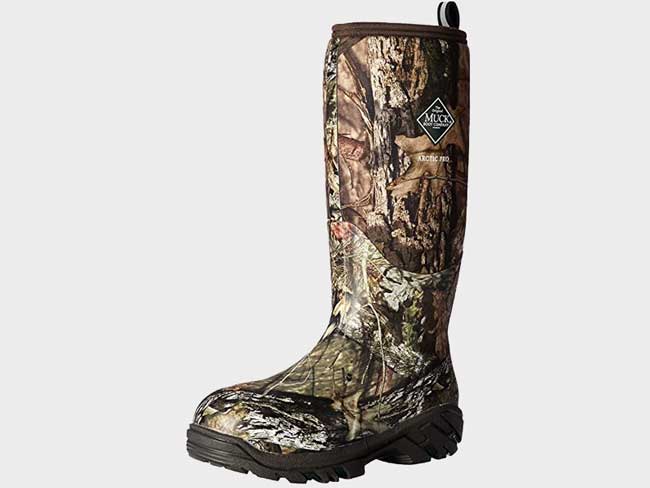
These Muck Boots are rated for temperatures as low as -60 degrees. That's cold. This should serve the majority of cold-weather hunting purposes including long treks through the snow in arctic climates from Alaska to Canada to Montana. First and foremost, that's due to the eight millimeters of neoprene in the boot's interior. That means warmth, waterproofing and even cushioning for your feet.
Additionally, there's thermal foam under the footbed and a stretch-fit calf that seals around your lower leg to keep warmth in and snow out. Plus, it's extra tall at 17 inches so there's a lot of overlap between your boot and pant leg and more insulation for your ankle.
As for the outside of the boot, we were a little curious as to why it was made with a Mossy Oak Country camo finish when something with more white and gray would have been more appropriate for a boot designed for arctic climates. Nonetheless, the design is fully waterproof so you can walk through snow or even standing water.

Pros:
- Thermal foam and neoprene insulation
- Stretch-fit calf
- 17-inch high ankle
- Waterproof design
- Vibram sole
Cons:
- Feet may sweat on long walks
The Arctic Pro is our recommendation for sub-zero hunting. That doesn't necessarily mean the arctic or tundra. If you hunt at high altitudes or even in deep Midwestern snow, the tall upper keeps snow out while the neoprene and thermal foam traps enough heat in to handle temperatures well below freezing.
What To Consider When Choosing Hunting Boots For Cold Weather

Insulation
If you're getting hunting boots specifically for cold weather, insulated boots are a must. Insulation is going to be the biggest factor you look at. Insulation prevents your body heat from radiating out of the boot so it stays trapped in, warming your foot.
The main downside of insulation is that it's heavy. Plus, too much insulation for the temperature might make your feet sweat, which is a problem for hunting since sweat can mean body odor that scares away game. In other words, more insulation is not always better.
Let's look at the main types of insulation and their pros and cons.
Types Of Insulation
There are four main types of insulation you'll find in winter hunting boots. They all have advantages and disadvantages.
- Thinsulate: Thinsulate is a synthetic insulator that provides great insulation by weight. You'll usually see it measured in grams.
- PrimaLoft: PrimaLoft is meant to be a synthetic alternative to goose down, one of nature's best insulators. That means it's lightweight, but unlike goose down, it continues to work even if it gets wet.
- Wool: Wool is a natural insulator that holds in a lot of warmth. Plus, it continues to insulate even when it's wet. Its primary downside is that it's heavy.
- Neoprene: Neoprene is an extreme insulator that traps in most of your body heat. As a result, it's probably overkill unless you're hunting in temperatures below freezing.
Warmth
Of course, if you're hunting in cold weather, you need warm boots. This means primarily looking at the insulation, but there are other features to consider as well. Most notably, you should check the ankle and fit. A warm hunting boot should fit snugly at the ankle so that cold air or snow and water don't enter in through the top.
Warm hunting boots will help to keep the rest of your body warm if you follow these tips.
RELATED: Best Hunting Base Layers According To Our Testing
Comfort
You usually spend a lot of time in your hunting boots. Whether it's hiking long distances in to your tree stand or just sitting in it, your feet are going to be in those boots for hours. You want them to be comfortable.
Comfort is not the same for everyone and has a lot to do with your foot and its size and shape. Before you choose a boot, measure your foot's length and width so you can compare it to the brand's sizing chart. Also make sure to go for wide sizes if you have a wide foot. Tight boots are not good for cold weather. You want room for your feet inside your boots.
Another aspect of comfort is the step. Most everyone can benefit from features like support insoles or interior cushioning that help take some of the pressure off your feet by absorbing the impact of each step.
Waterproof
For most climates winter means water in some form or another. Whether it's rain, snow or ice, your cold weather boots should definitely be waterproof.
Most boots accomplish this with some kind of waterproof lining like Gore-Tex or Windtex. Additionally, many boots have waterproof outsoles that keep any water from entering in the bottom.
That said, the best way to waterproof a boot is to make it entirely waterproof, or neoprene, like waders. That's why boots designed for wading through standing water have full neoprene uppers. However, neoprene isn't usually as tough as leather, so consider your needs.
Waterproof boots are just as important as waterproof jacket and pants are for keeping you warm and comfortable in the field.
Breathable
Even in cold weather, you want your boots to be breathable. Since hunting usually involves periods of intense hiking followed by periods of not moving, the temperature of your feet is going to fluctuate. In fact, they might even get hot.
In this case, breathability helps sweat moisture escape which keeps your feet cool and comfortable. Plus, it keeps sweat from building up on your feet which could lead to body odor that could give you away to your quarry.
Easily Broken In

All boots need to be broken in. Everyone's feet move differently, and the boots have to adapt to that movement. Usually, you should do this by wearing the boots for just an hour or two at a time for a couple of days.
However, some boots go through this process faster than others. If you're buying your winter hunting boots last minute, check to make sure they break in fast or you'll end up with sore feet.
Durable
Here at DeerHuntingGuide.net, we can't stand hunting boots that don't last. We only recommend high quality, durable boots that we have actually used and can vouch for their durability.
Make sure to check the construction of a boot before deciding on it. Any hunting boot should be durable, but cold-weather boots even more so. In the case of leather boots, that means quality, full grain leather with double or triple stitching that holds up to bends and scrapes. If they're not leather, it should be flexible but thick enough to handle rough terrain.
It is best to buy your boots from a reputable hunting apparel brand to ensure that you get quality boots that will last a long time.
Boot Height
For cold-weather boots, a taller ankle is usually better. It prevents snow or water from entering into the boot and provides warmth farther up your leg. That said, if you have shorter legs—as a woman, for instance—a taller boot could make it harder to maneuver. Consider your personal situation as well.
Budget
You usually get what you pay for when it comes to hunting gear. Cheaper boots are less durable, less comfortable and less warm. However, you can sometimes calibrate your budget to your needs. For instance, if you hunt infrequently, you may not need to pay top dollar for the most durable boot that's made to handle daily hikes.
Warranty
A warranty is always a great thing to look for with a hunting boot. Not only does it give you a time period during which you can repair or exchange the boots if they happen to be faulty, but it shows that the manufacturer stands by their product and trusts it to last.
Types Of Hunting Boots
Rubber Hunting Boots
Many deer hunters and bow hunters in particular like to wear rubber boots because they deposit less scent on the ground and tend to keep scent confined to the boot.
Lightweight Hunting Boots
Some hunters prefer a lightweight boot, particularly hunters that put on a lot of miles while hunting, like elk hunters, upland hunters and more.
Pac Boots
Pac Boots are some of the best cold weather hunting boots available. They often come with multiple inserts for use in different weather conditions. Couple them with a good pair of wool socks and your feet will be toasty warm in cold temps.
Muck Boots
Muck boots are a brand of boots that are preferred by many hunters. They excel in design and durability.
Final Thoughts
There is nothing worse than cold feet, so hunting in cold weather requires special boots. In our experience, we've found that the Baffin Impact is an ideal boot for keeping your feet warm, comfortable and supported during extreme cold conditions. However, we also found a number of other boots good for specific cold-weather situations.
Boots are only one factor for keeping your feet warm while hunting. You will also need quality hunting socks and in the extreme cold temperatures of the late season, you may even want heated hunting socks.
Make sure you consider the conditions you'll be hunting in to find the best boot for you.
